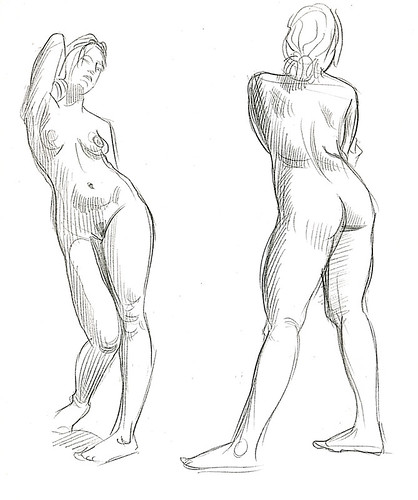
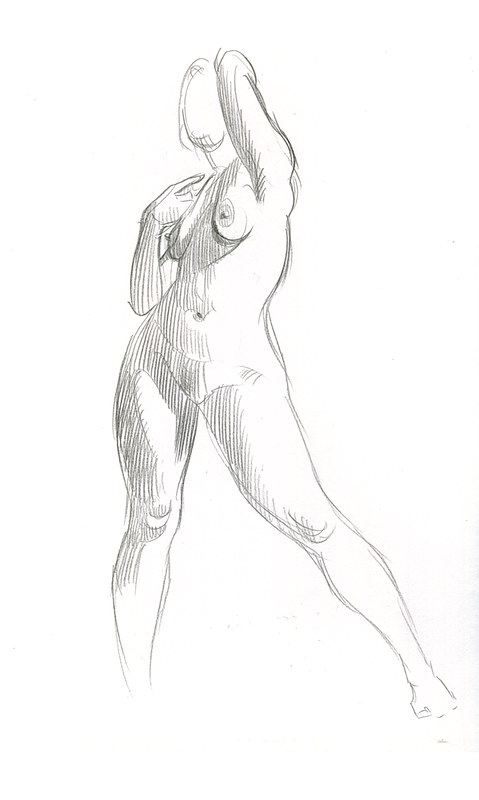
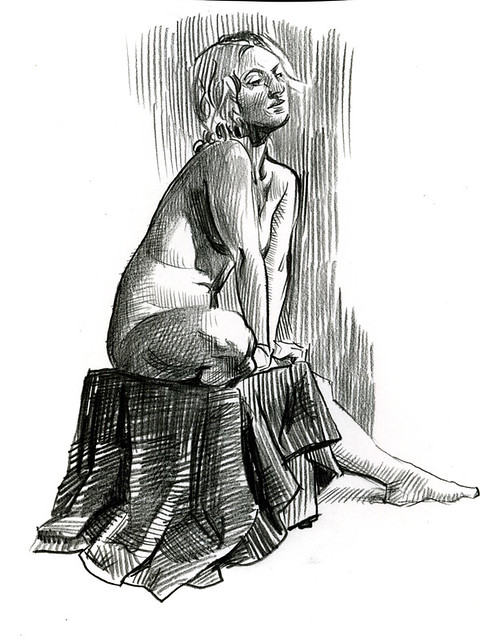
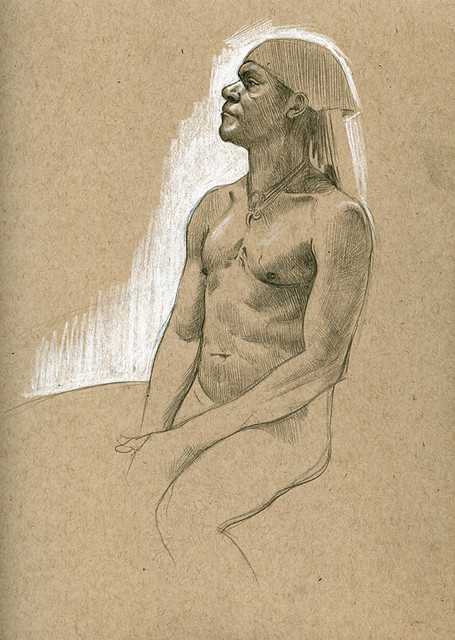
Hi Paul, My teacher once told me, figure drawing should spend more time in observation and you will need less time to draw. How do you distribute your time on life drawings? Is it very different than urban sketching on time management?
Hi Alvin, I agree there is a certain amount of observation that one needs to do before drawing, but I don't know if I think there is a difference between the figure and anything else. I know I'm always running out of time with my figure sketches, so maybe I should try looking longer first ;) Of course, observation only goes so far. If you have never drawn before, you can spend all day looking at something, but that doesn't mean you will know how to draw it when you finally start.
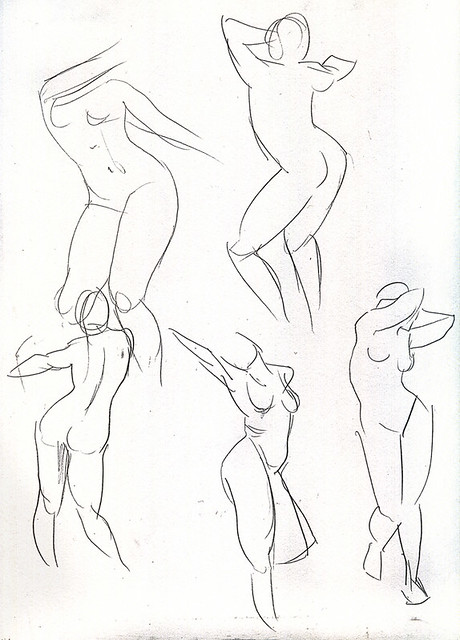
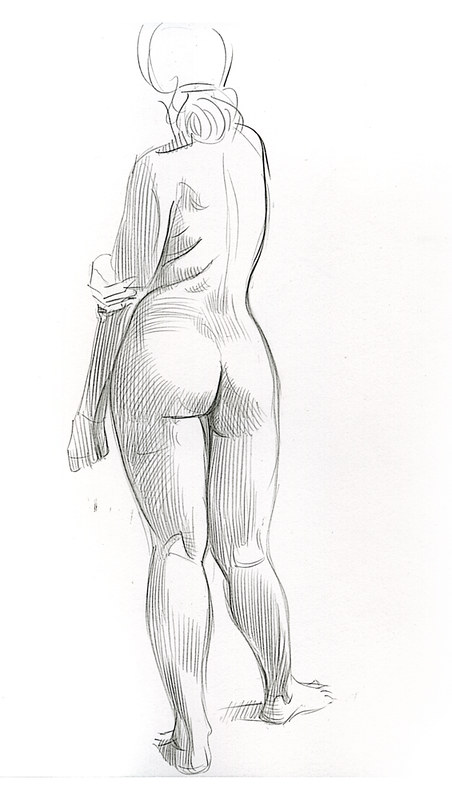
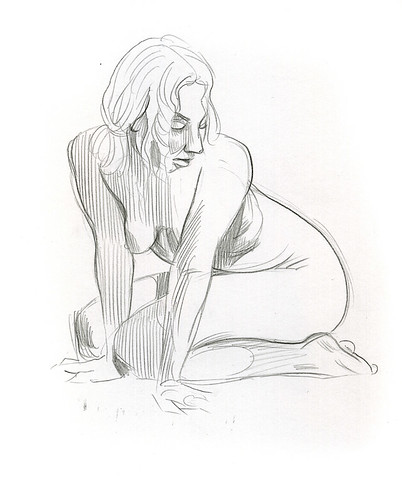
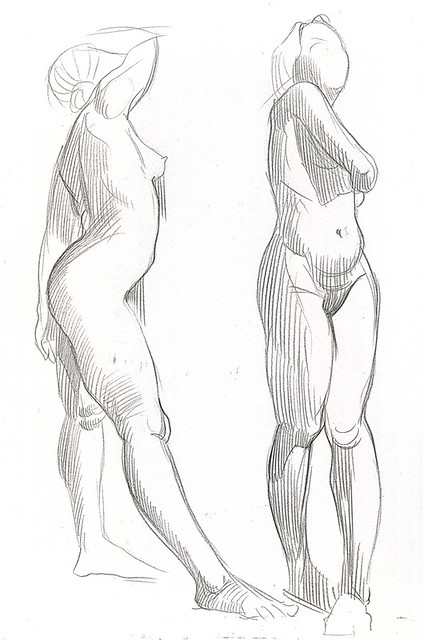
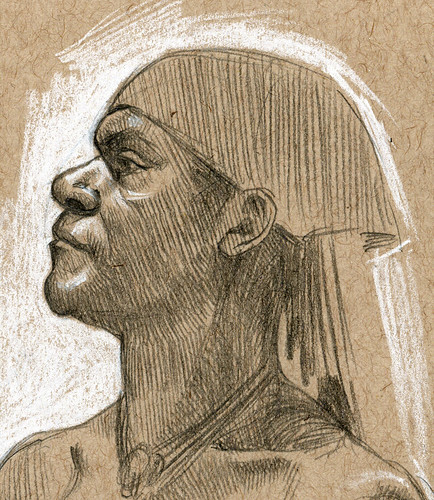
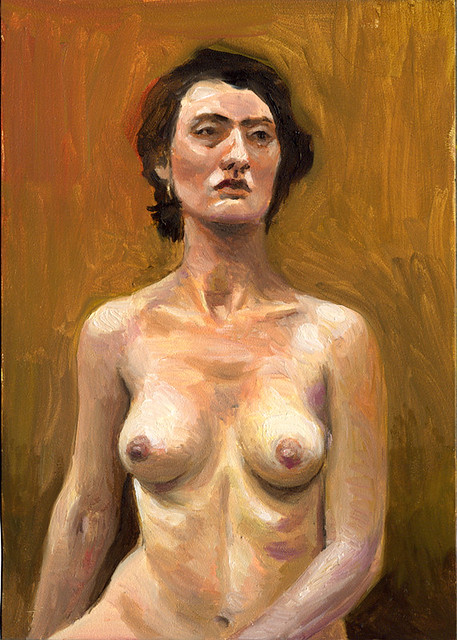
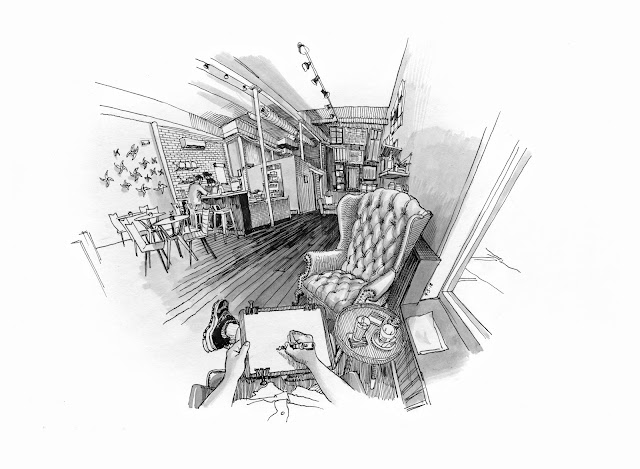
When asked what kind of art I make, I say "I sketch what I see." That's it. I go out on location and sketch what I see. Or I stay home and sketch what I see. The "what I see" part is what's important to me. And that brings with it all sorts of other ideas to explore. Because what do we see, really? My style of sketching is a mixture of a few different approaches to observational art-making. There's the still-life/in-studio tradition where the artist narrows their focus on just a small portion of their field of view. There's plein-air landscape painting, where often the goal is to widen the field of view as much as possible and take in sweeping vistas. There's architectural and perspective drawing, where the challenge is to effectively depict human-made spaces with their corresponding geometry in a convincing way. And there's figurative art, where capturing the human form in one way or another is the goal. You can find examples of each of thes...
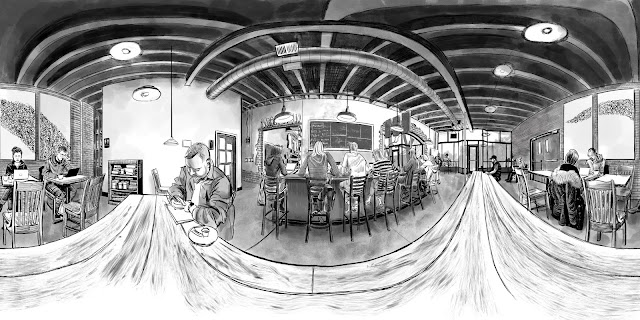
Ever since I first sketched a spherical panorama in the Procreate app, people have been asking for a tutorial, so I've finally put together the steps for how I did it. I had seen illustrations that you can pan around before and I wanted to figure out a way to do one on site, rather than make it in my studio from photo references. I will start by saying that panoramic urban sketches done on location are nothing new. The brilliant G é rard Michel and Arno Hartmann have been doing them for some time, and Arno had already been taking his analog images done on site and turning them into scrollable panos with computer software years before I set out to try this. Most of the time when I draw in curved perspective I draw "intuitively," meaning I don't set up any vanishing points or use any rulers or grids. In researching this process I knew that to do a 360 degree drawing accurately I would need an equirectangular grid with 2:1 proportions. I found one, along with a ton of...
It's been an amazing year for me, and sketching has been a big part of it. I have done a lot of drawings this year, too many to post, really, so here are a few highlights of what I haven't yet posted. Click any of them to see them larger on Flickr. Now I've got to top all that in 2015.



Hi Paul, My teacher once told me, figure drawing should spend more time in observation and you will need less time to draw. How do you distribute your time on life drawings? Is it very different than urban sketching on time management?
ReplyDeleteHi Alvin, I agree there is a certain amount of observation that one needs to do before drawing, but I don't know if I think there is a difference between the figure and anything else. I know I'm always running out of time with my figure sketches, so maybe I should try looking longer first ;) Of course, observation only goes so far. If you have never drawn before, you can spend all day looking at something, but that doesn't mean you will know how to draw it when you finally start.
Delete